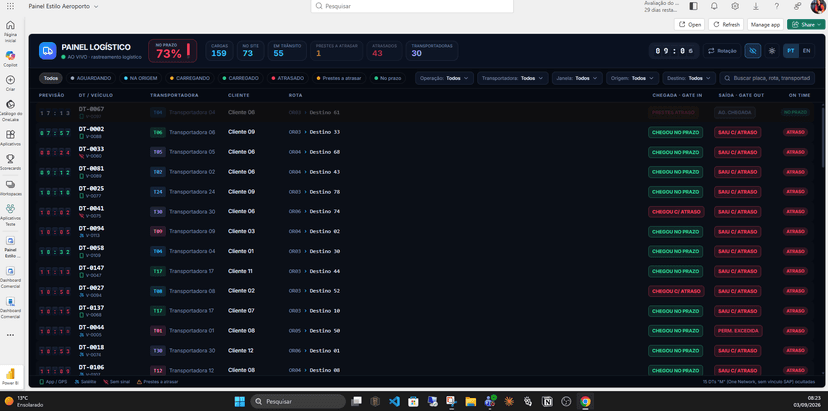
Logística Inteligente
Your shipment is going to be late. The question is: how early will your operation be able to detect it?
In many transportation operations, a delay only becomes visible after it has already happened.

The Invisible Problem That Costs
Logistic complaints are part of the routine of many companies. Delays, failures, route errors, communication failures and out-of-time deliveries end up being treated as “part of the game”. The problem is that when the company acts only in a reactive way, each complaint becomes a fire to be extinguished — consuming time, money and credibility.
What few managers realize is that complaints are not just operational problems. They are extremely valuable data. And when analyzed in a structured way, they can become predictability, efficiency and competitive advantage.
When a complaint occurs, the impact goes far beyond freight or product return. There are direct costs, such as referrals and delays, but also operational costs (rework, team hours, reverse logistics), opportunity costs (loss of customers, churn) and, mainly, reputation costs.
Companies that cannot see this impact in a consolidated way end up treating symptoms, but never the root cause.
Many operations still depend on spreadsheets, static reports and manual analysis to track complaints. The problem with this model is simple: it looks only at the past.
Analyzing data in this way is like driving looking only through the rearview mirror. You understand what's happened before, but you can't anticipate what's ahead. This generates slow decision-making, lack of prioritization and no predictive capacity.
The transformation begins when the company centralizes its information on a Business Intelligence platform, such as Power BI, connecting data from ERP, TMS, WMS, service and logistics.
With smart dashboards, the manager becomes clear about:
But the real jump happens when we add artificial intelligence to this ecosystem.
With AI, data are no longer only historical and become predictive. Algorithms analyze patterns, behaviors and recurrences to anticipate risks before they become complaints.
In practice, this allows:
The result is less rework, lower operational cost and a much more positive customer experience.
Data-driven companies not only use complaints to correct errors, but to learn, adjust processes and evolve continuously.
When logistics ceases to be reactive and becomes predictive, the company not only delivers products — it delivers trust, predictability and operational excellence.
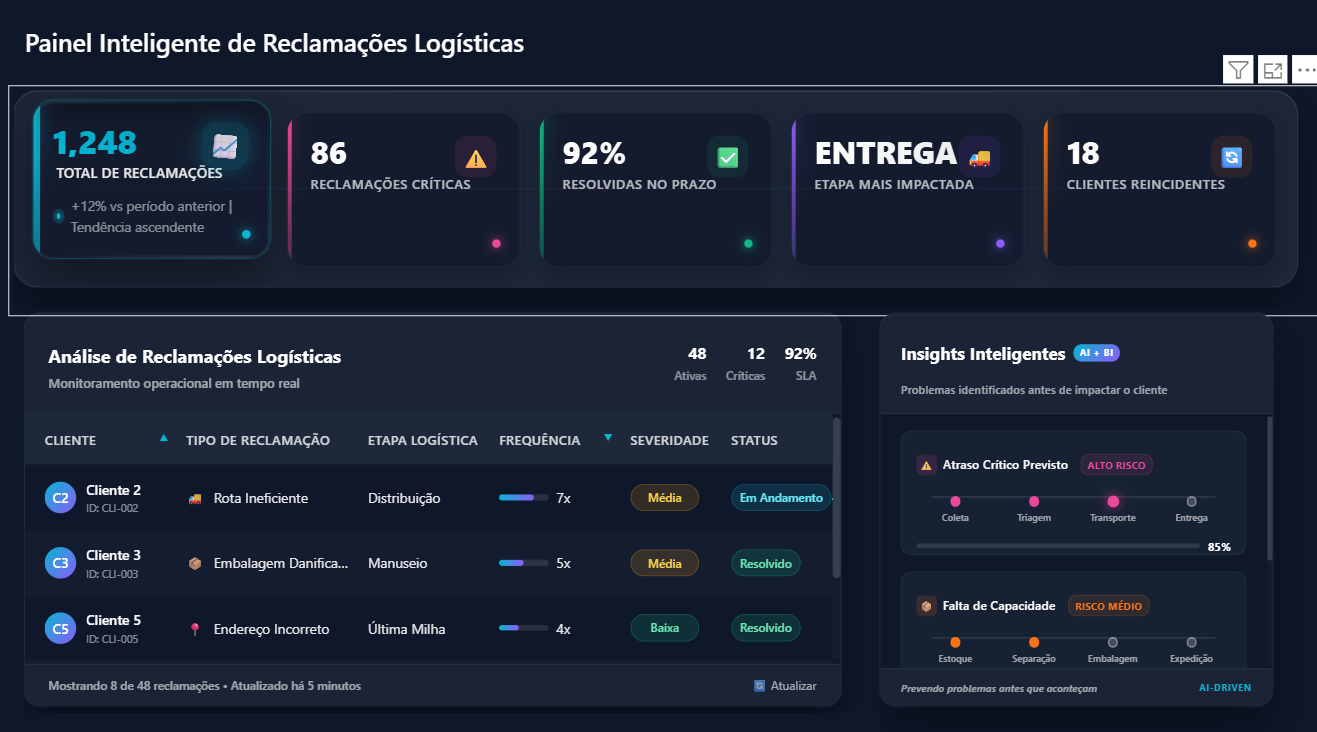
At DriveData, we help companies transform operational data into strategic decisions. We create smart dashboards on Power BI, structure end-to-end data and apply analytical and predictive models that reduce costs, increase efficiency and bring predictability to the operation.
If your company still manages complaints in spreadsheets or reacts only when the problem happens, it's time to evolve.
Talk to DriveData and find out how to turn logistics complaints into strategic intelligence, predictability, and sustainable growth.
DriveData — Human Growth with Technology.
In many transportation operations, a delay only becomes visible after it has already happened.
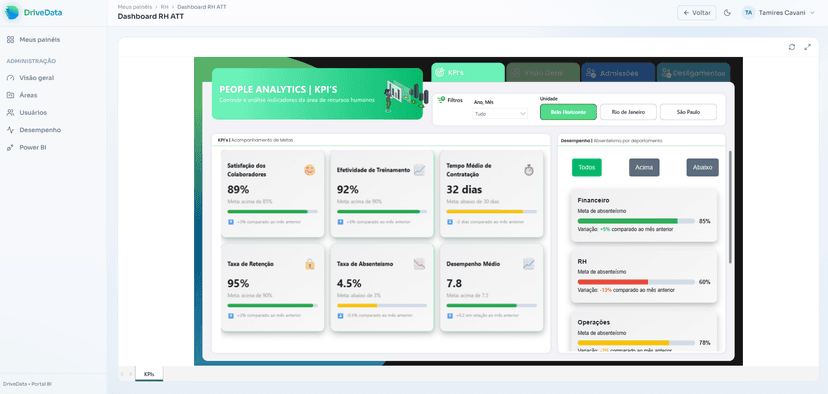
From per-user licensing to shared capacity: the (real case with fictional data) case of a retailer that stopped having to choose between "saving money" and "giving everyone access."
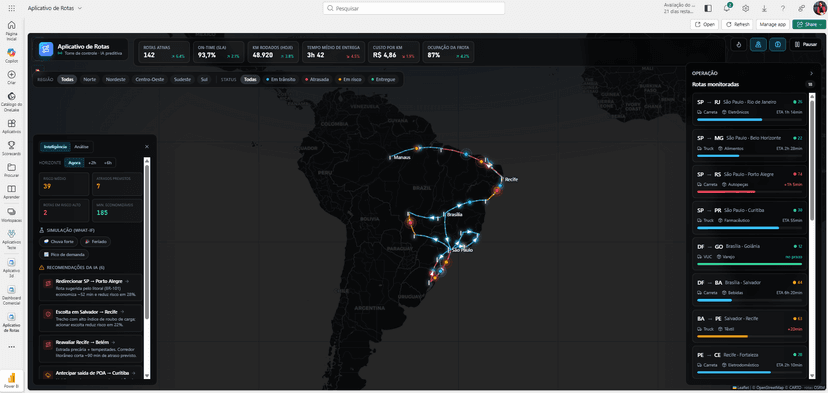
What changes for Power BI and Microsoft Fabric professionals now that the platform is starting to host action — not just analysis.
Tamires · DriveData
online now