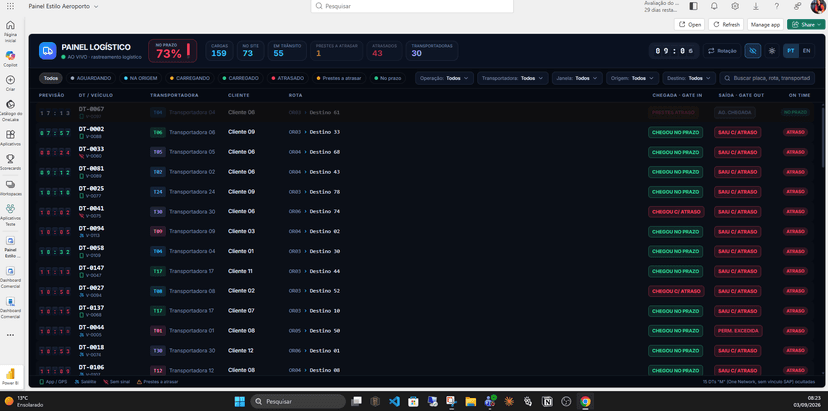
Logística Inteligente
Your shipment is going to be late. The question is: how early will your operation be able to detect it?
In many transportation operations, a delay only becomes visible after it has already happened.

The Science of Intelligent Positioning in Retail - Case Pharmaceutical The strategic positioning of gondola products represents one of the most significant and underutilized opportunities for optimization of pharmaceutical retail results
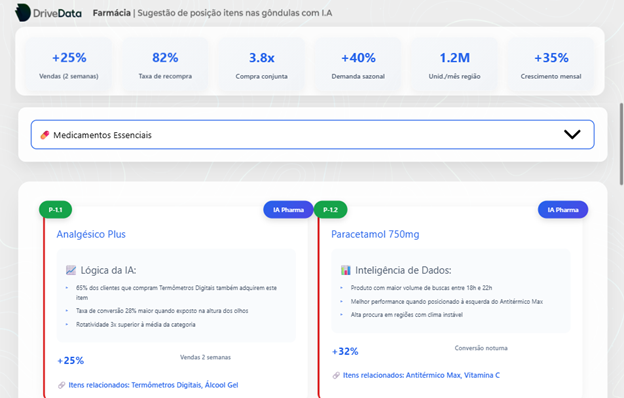
The strategic positioning of products in gondolas represents one of the most significant and underutilized opportunities for optimization of results in pharmaceutical retail. Traditionally, decisions on product localization are based on intuition, empirical experience or standardized practices that do not consider specific patterns of customer behavior or complex correlations between products. DriveData has developed a revolutionary solution that applies advanced Artificial Intelligence to analyze consumer behavior and optimize product positioning, resulting in sales increases of up to 35% and repurchase rates of more than 82%.
Our AI Pharma platform transforms customer behavior data into actionable insights for strategic positioning, revealing invisible correlations that directly impact commercial performance. Through analysis of purchasing patterns, temporal preferences and correlations between products, the system identifies optimization opportunities that often go unnoticed by traditional merchandising approaches. This advanced analytical capacity allows pharmacies to maximize gondola space efficiency while improving customer experience and increasing profitability.
The integration between behavioral analysis and layout optimization creates a virtuous cycle where better positioning generates more data about customer preferences, which in turn further refine positioning recommendations. This machine learning-based continuous improvement approach ensures that merchandising strategies constantly evolve to monitor changes in consumer behavior and market trends while maintaining sustainable competitive advantage.
The core of our solution lies in the ability to identify complex correlations between products that are not immediately obvious through casual observation or superficial analysis of sales data. The system revealed, for example, that 65% of customers who acquire digital thermometers also buy analgesics, a correlation that suggests preventive behavior where consumers anticipate health monitoring needs and symptom relief. This insight allowed strategic positioning that resulted in a 25% increase in sales of analgesics in just two weeks.
The analysis goes beyond simple purchasing correlations, investigating temporal sequences and seasonal patterns that reveal underlying motivations of consumer behavior. The system identified that paracetamol 750mg presents peak demand between 18h and 22h, correlating with working hours when fatigue symptoms and headaches are more prevalent. This temporal understanding allows stock optimization and positioning that anticipates demand and maximizes availability when customers most need the product.
The ability to analyze geographical and climatic correlations adds another dimension of sophistication to behavioral analysis. The system detected that regions with unstable climates have a greater demand for certain drugs, allowing regional adjustments in positioning and inventory strategies that reflect specific needs of each location. This analytical granularity ensures that strategies are customized for specific contexts, maximizing relevance and effectiveness.
The application of consumer psychology principles through AI algorithms represents a significant competitive differential of our solution. The system identified that products positioned at eye height have a 20% higher conversion rate, but goes beyond this basic observation to analyze how different types of products respond to variations in positioning. Emergency medicines, for example, benefit from positioning in places of easy access, while preventive products can be strategically positioned to stimulate impulse purchase.
The analysis of movement flow within the pharmacy reveals navigation patterns that influence positioning decisions. The system found that paracetamol positioned to the left of antacids presents superior performance, taking advantage of natural patterns of reading and eye movement that direct attention sequentially. This understanding of visual ergonomics enables layout optimization that works with, rather than against natural tendencies of human behavior.
Customization of customer-based positioning strategies adds another layer of sophistication to optimization. The system analyzes purchasing patterns by age group, gender and visit frequency to suggest positions that maximize relevance for different customer segments. This segmented approach ensures that products are positioned to meet specific needs of different consumer groups, maximizing satisfaction and conversion.
The predictive capacity of our solution transforms stock management and reactive positioning to proactive, anticipating demand changes before they manifest themselves in sales. The system identified seasonal patterns that resulted in a 40% increase in seasonal demand by forward positioning relevant products. This ability to predict allows pharmacies to strategically position themselves to capitalize on emerging trends before competitors identify the same opportunities.
Analysis of online search and behavior trends complements physical sales data to create more robust and accurate predictive model. The system correlates online search peaks for specific symptoms with subsequent demand for related drugs, allowing proactive adjustments in positioning and inventory. This integration between digital and physical data provides early visibility on demand changes that would not be detectable through isolated store sales analysis.
The ability to model future scenarios based on external variables such as climate change, seasonal disease outbreaks or local events allows strategic planning that goes beyond extrapolating historical trends. The system may suggest positioning adjustments based on weather forecasts, calendar of local events or public health warnings, ensuring that pharmacies are always prepared to meet the emerging needs of their customers.
Investing in AI for customer behavior analysis is no longer a futuristic option, but a strategic need for pharmacies that seek leadership in markets where customer experience and operational efficiency determine success. DriveData offers not only state-of-the-art technology, but also expertise in implementation that ensures successful adoption and maximizing results.
The behavioral intelligence revolution is happening now. Choose DriveData and position your business at the forefront of retail innovation, with solutions that not only optimize current results but create capabilities for future success.
Learn more about our AI solutions for behavioral analysis and positioning optimization, and find out how we can turn your pharmacy into a benchmark for excellence in customer experience and commercial performance. DriveData is ready to be your partner on the transformation journey that will take your pharmacy to the next level of commercial intelligence and sustainable success.
In many transportation operations, a delay only becomes visible after it has already happened.
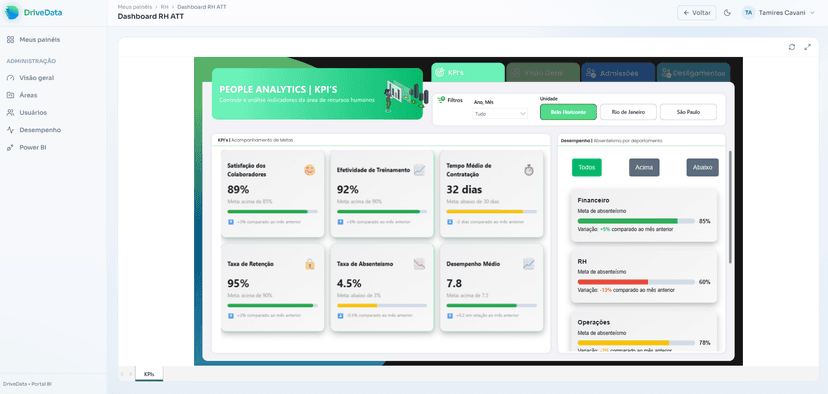
From per-user licensing to shared capacity: the (real case with fictional data) case of a retailer that stopped having to choose between "saving money" and "giving everyone access."
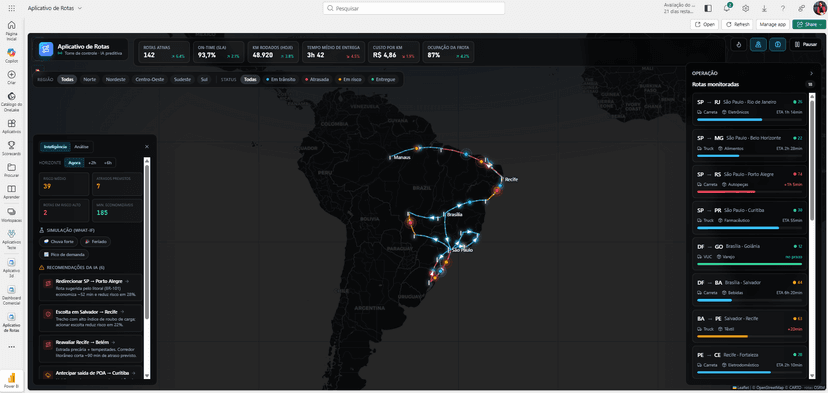
What changes for Power BI and Microsoft Fabric professionals now that the platform is starting to host action — not just analysis.
Tamires · DriveData
online now