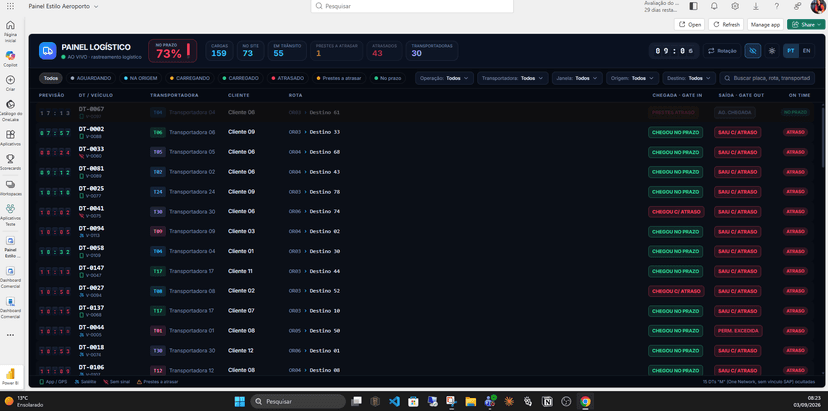
Logística Inteligente
Your shipment is going to be late. The question is: how early will your operation be able to detect it?
In many transportation operations, a delay only becomes visible after it has already happened.

Centralised data, real-time visibility and artificial intelligence
Logistic management is experiencing a clear demonstration of digital maturity. In an increasingly pressured market for customer costs, deadlines and experience, operating with disconnected spreadsheets and outdated reports is no longer just inefficient — it has become a strategic risk.
Today, high-performance companies have understood that centralized data, real-time visibility and artificial intelligence are fundamental pillars for faster, more accurate and profitable decisions. In this article, you will understand how operational dashboards and predictive analytics are transforming the logistics of a cost center into a true growth lever.
Much of the logistical bottlenecks are not in the operation itself, but in the way the data is managed. Spread information between ERP, spreadsheets, transport systems, WMS and manual controls create a common scenario:
Without integration and without unified vision, the manager operates in the dark — and pays dearly for it.
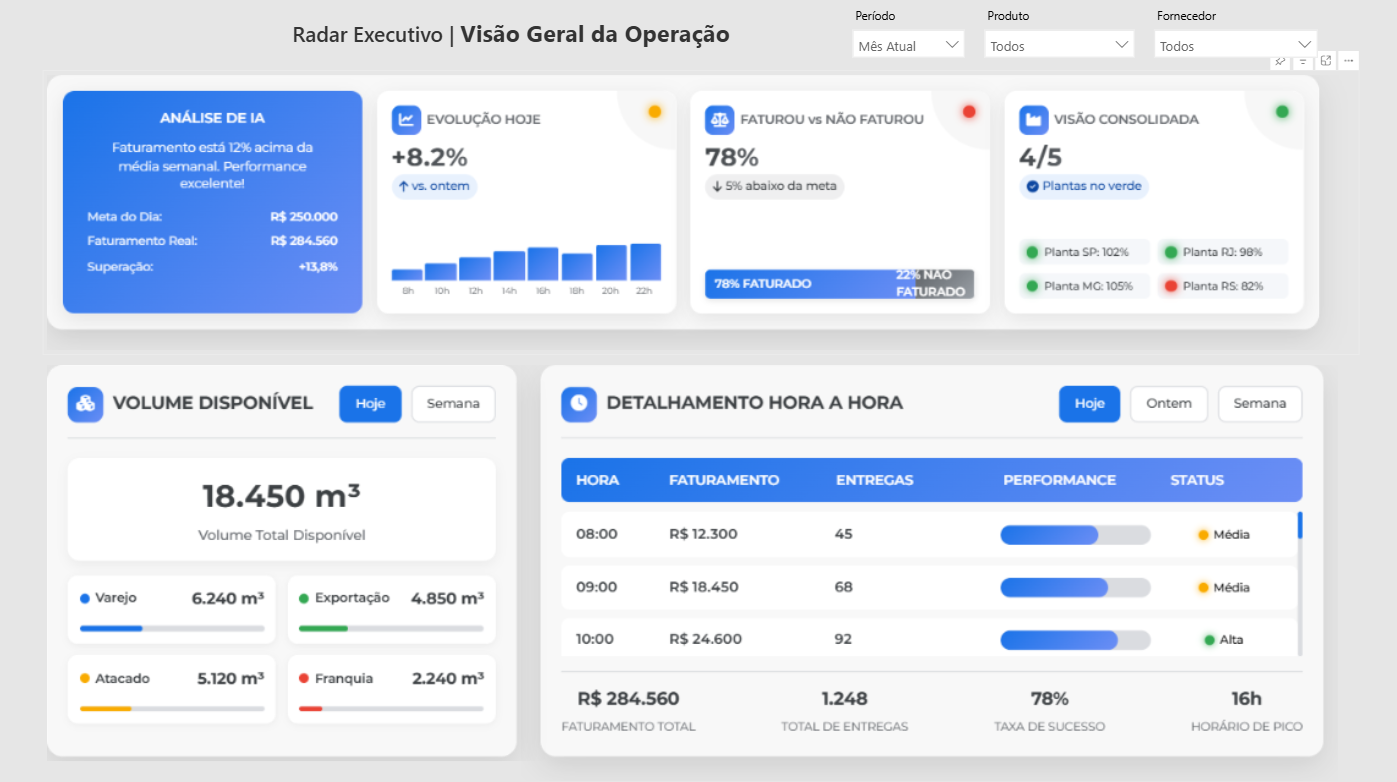
The first major leap in logistic maturity occurs with the implementation of smart operational dashboards. More than beautiful graphics, they consolidate critical data in a single environment, offering a clear and real-time reading of the operation.
With a well structured dashboard, the manager goes to:
Some indicators are indispensable to ensure control and efficiency:
These indicators, when analyzed in an integrated way, completely change the game.
If dashboards deliver visibility, the artificial intelligence delivers anticipation.
By applying AI and predictive models in logistics, companies start to predict scenarios, not just react to them. In practice, this means:
The result is a more resilient, efficient and scalable operation — with less risk and more margin.
Digital transformation in logistics is no longer a trend. It's a prerequisite for competing.
Companies that dominate your data can:
And all this starts with the right basis: data architecture, strategic BI and business applied intelligence.
Na DriveData, we help companies transform dispersed data into smart decisions. We operate from structuring data architecture to building executive dashboards and applying artificial intelligence tailored to the logistics reality of your business.
We don't just deliver reports. We deliver clarity, predictability and result.
Talk to our experts and find out in practice how BI and AI can elevate your logistics to a new level of performance.
In many transportation operations, a delay only becomes visible after it has already happened.
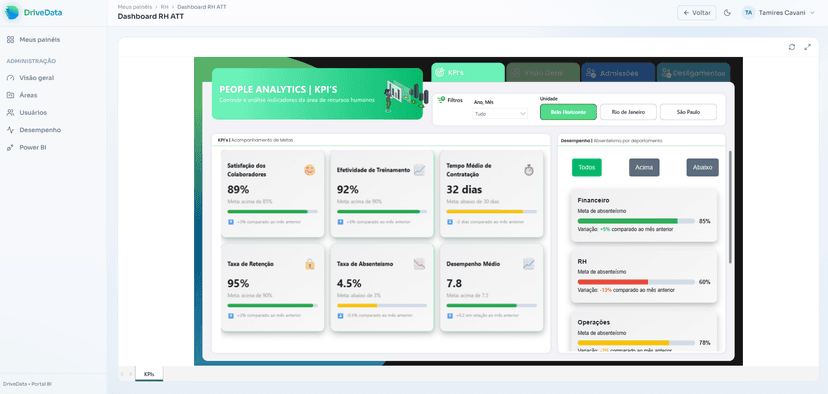
From per-user licensing to shared capacity: the (real case with fictional data) case of a retailer that stopped having to choose between "saving money" and "giving everyone access."
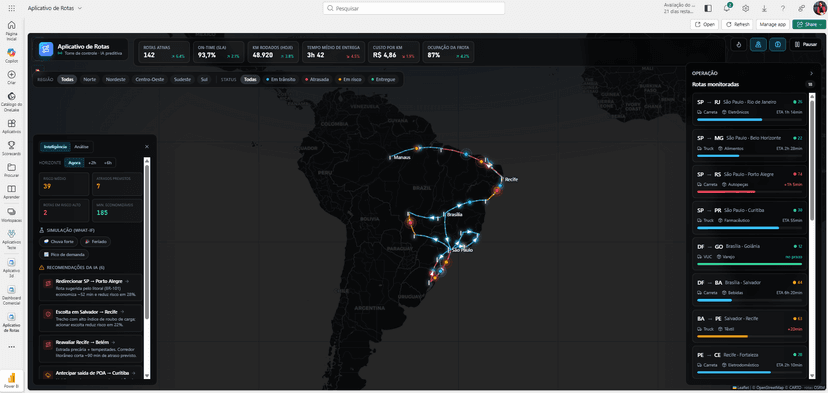
What changes for Power BI and Microsoft Fabric professionals now that the platform is starting to host action — not just analysis.
Tamires · DriveData
online now